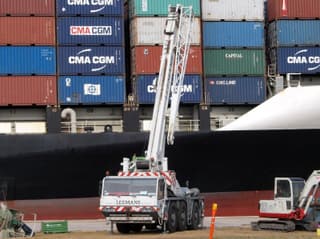
Moving a shipping container with a crane in Memphis
Memphis moves a lot of freight, and plenty of containers end up on farms, job sites and back lots as storage. When a tilt-bed truck cannot reach the spot, a crane lifts the box over the fence.
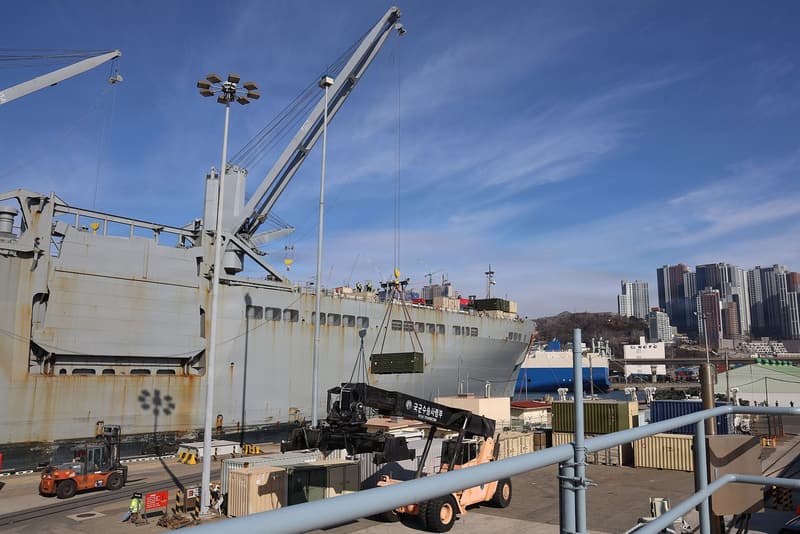

How much does it cost to rent a crane to move a shipping container in Memphis?
For an empty 20 or 40-foot container set close to the truck, a 15 to 30-ton truck crane at $195 an hour with a 3-hour minimum often does it, about $585 on a posted 2026 sheet. A loaded box or a long reach can call for a 35 or 40-ton crane at $960 to $1,060 for 4 hours.
- An empty 20-foot standard container weighs about 4,850 pounds; a 40-foot about 8,170.
- Loaded, a 20-foot box can reach 67,200 pounds gross, so ask what is inside.
- Lifting empty is far cheaper and safer than lifting full.
- A Memphis lane closure is $50 plus $10 per lane per day.
What a container weighs
Container specs come from the box’s owner, and the weights are stamped on the doors. One large container lessor lists these for its standard dry boxes:
| Container | Empty (tare) | Max gross, loaded |
|---|---|---|
| 20-foot standard | 4,850 lb | 67,200 lb |
| 40-foot standard | 8,168 lb | 71,650 lb |
| 40-foot high cube | 8,587 lb | 71,650 lb |
Empty, a container is a light lift for a truck crane. Full, it can weigh as much as the crane itself. Empty it first if you can.

Matching the crane to the box
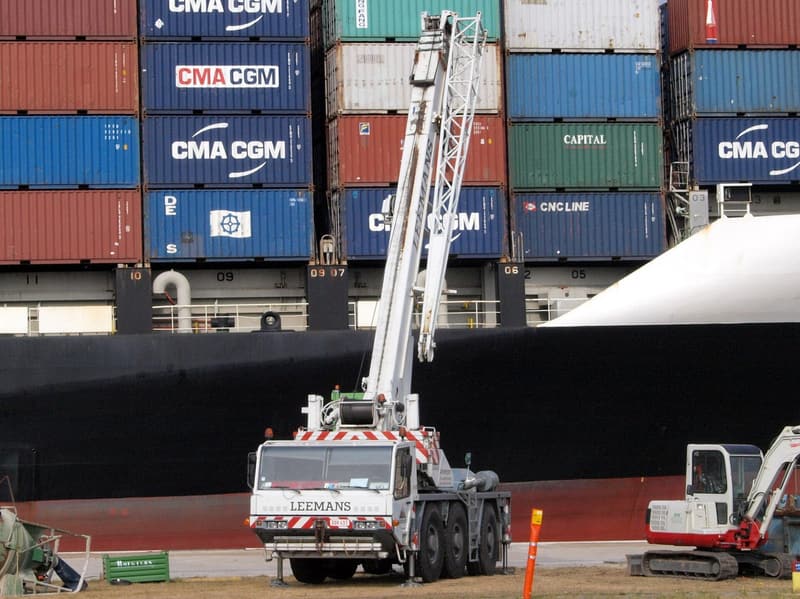
- Empty box, truck parks next to the spot. A 15 to 30-ton truck crane usually covers it.
- Over a fence or a building, 30 to 50 feet out. A 35 or 40-ton truck crane.
- Loaded box or a long reach. 50 tons or more, which on the posted sheet means an 8-hour minimum and an oiler.
Tell the operator the container size, whether it is empty, where the delivery truck will stop and where the box needs to land.
Ground, wires and the street
Outrigger pads need firm ground, and so does the landing spot. Delta soil around Memphis turns soft after rain, so gravel or mats help on a back lot. Check overhead lines: Tennessee law keeps the crane and the load 10 feet from high-voltage lines unless MLGW has made them safe.
If the crane or the delivery truck has to take a lane on a city street, Memphis charges $50 plus $10 per lane per day and asks for 10 calendar days of notice.
Rough costs
| Job | Crane | Rough bill before extras |
|---|---|---|
| Empty 20-foot box, short reach | 15 to 30-ton truck crane, 3 hours | $585 |
| Empty 40-foot box over a fence | 35-ton truck crane, 4 hours | $960 |
| Loaded box or long reach | 50-ton all-terrain crane, 8 hours | $2,800 |
From the posted sheet. Add the delivery truck, rigging if not included and any lane closure.
Common questions
Can a crane set a container on blocks or a foundation?
Yes. That is one of the main reasons to use a crane instead of a tilt-bed truck. Have the blocks or piers set and level before the crane arrives so the hourly clock is not waiting on them.
Can I stack two containers?
A crane can, and standard containers are built to stack. Check local zoning and building rules for a stacked structure before you plan it.
What lifting gear is needed?
Containers are lifted from their corner castings with a four-leg sling set or a spreader. The crane company supplies the rigging; ask that it is included in the price.
Sources for the Memphis numbers
- Textainer, dry freight container specifications
- Memphis Code of Ordinances 2-22-7, right-of-way fees
- Tennessee Code 50-3-1003, high-voltage line clearance
- Missouri Crane, rate sheet updated August 2026
Get this job in front of a Mid-South crew
Share what you know so far.
Read next
-
 Memphis crane prices, 15 to 90 tons
A full posted sheet from August 2026: truck cranes, all-terrain cranes, minimums, weekly rates and riggers.
-
 Rooftop units on Memphis buildings: crane size and the bill
Setting rooftop HVAC units in Memphis: truck crane or all-terrain by radius, the city lane closure fee, MLGW lines, airport notice and posted 2026 rates.
-
 Lifting a storm-damaged tree off a Memphis house
Crane help for a storm tree on a Memphis house: what MLGW handles, the 10-foot rule for high-voltage lines, setting up on Midtown streets and posted rates.